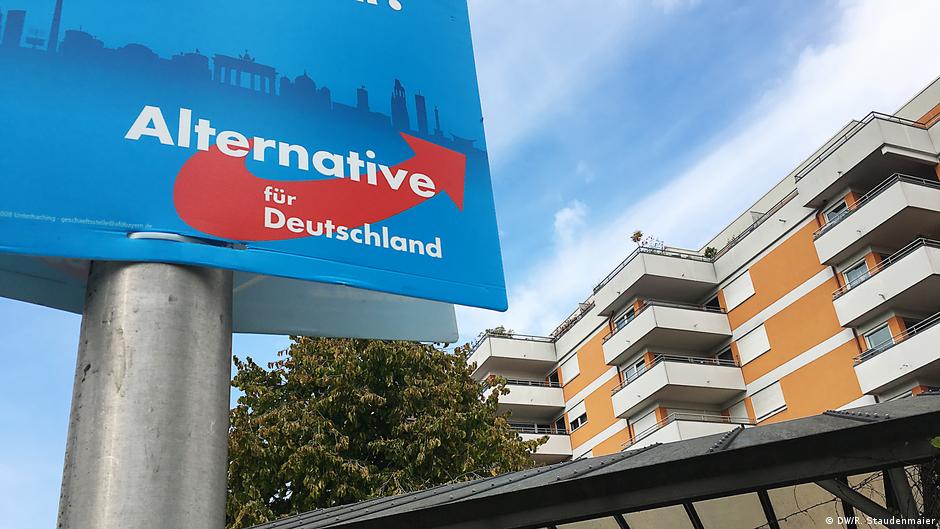
Bavaria, long considered the steadfast stronghold of the Christian Social Union (CSU), has witnessed a significant political upheaval, with a growing number of its traditional voters turning to the far-right Alternative for Germany (AfD). This seismic shift, highlighted by recent federal election results where the AfD achieved its highest support in former West German states, signals a profound change in the region's political landscape. For decades, the CSU was the undisputed political force in Bayern, embodying a conservative, regional identity. However, recent trends suggest that the AfD is increasingly challenging this dominance, drawing support from a demographic that feels increasingly disenfranchised by mainstream politics.
The Shifting Sands in Bavaria: A Microcosm in Deggendorf
To truly understand the dynamics of why Bavarian voters switched, one must look beyond statistics and delve into the sentiments of everyday citizens. In the eastern Bavarian town of Deggendorf, near the Czech border, a palpable sense of discontent emerged, offering a stark illustration of the broader trend. As recounted by a local woman in her early 70s, there's a strong desire for "stricter politicians" and a "fresh wind in politics." Despite Deggendorf appearing outwardly pleasant with its bustling market and cafes, this resident, like many others, believes the town is "no longer" the nice place it once was. This sentiment reflects a deeper dissatisfaction that the AfD has expertly tapped into, presenting itself as the voice for those seeking radical change.
The numbers from Deggendorf underscore this point: the AfD garnered 19.17 percent of the vote in the national election, a remarkable figure for a constituency traditionally loyal to the CSU. This level of support far outstripped expectations and serves as a powerful indicator of how effectively the AfD has resonated with parts of the csu afd bayern electorate.
Immigration Concerns: A Catalyst for Change
A primary driver behind the AfD's burgeoning appeal in Bavaria, particularly in towns like Deggendorf, appears to be anxieties surrounding immigration. The town's experience in 2015, when a reception center processed hundreds of asylum-seekers during the peak of refugee arrivals in Germany, left a lasting impression. While the resident interviewed emphasized, "We're not xenophobic in Bavaria," she added, "but the last two years were too much." This nuanced yet firm statement encapsulates the feelings of many who feel their communities were overwhelmed.
Bavaria's geographical location made it a crucial entry point for asylum-seekers, and it continues to host the second-highest immigrant population in Germany. Even with a significant drop in asylum applications from 67,000 in 2015 to over 16,000 recently, the memory and perceived impact of past influxes persist. The AfD has masterfully leveraged these concerns, presenting itself as the only party willing to address what many Bavarian voters perceive as unchecked immigration. This focus on border control and national sovereignty directly challenges the more moderate stance often taken by the CSU, which, despite its conservative roots, operates within the broader framework of federal German policy.
The CSU's Shifting Ground and the Rise of a Rival
Historically, the CSU has been the dominant political force in Bavaria, acting as the more conservative sister party to Angela Merkel's CDU. Until the AfD's recent surge, the CSU occupied the furthest-right position within Germany's Bundestag. However, the latest election results marked a significant downturn for the party, with its share of the vote plummeting to 38.8 percent – over ten points lower than its performance in the 2013 federal election. This decline represents the CSU's lowest electoral result in recent history, indicating a substantial loss of its traditional conservative base. For a deeper dive into this historical shift, see CSU's Lowest Point: How AfD Reshaped Bavarian Election Results.
The AfD has effectively positioned itself to capture these disaffected voters, offering a more hardline alternative on issues ranging from immigration to national identity. Many observers now refer to the AfD as the "new CSU" in Bavaria, suggesting it has successfully appropriated the traditional conservative platform and rhetoric that once belonged exclusively to the CSU. This dynamic presents a formidable challenge for the CSU, which, despite still holding an absolute majority in Bavaria, is grappling with how to win back its lost electorate ahead of upcoming state elections. The party faces an existential question: how to differentiate itself from the AfD while simultaneously appealing to its conservative core without alienating more centrist voters.
Beyond Immigration: Broader Discontent Fueling the AfD's Appeal
While immigration undoubtedly plays a pivotal role in the AfD's success in Bavaria, it's crucial to acknowledge that their appeal extends to a broader spectrum of discontent. Many Bavarian voters feel neglected by established parties, not just on immigration, but also on issues touching their daily lives. Economic anxieties, for instance, are a significant factor. Rising inflation, energy costs, and the perceived decline of traditional industries contribute to a sense of insecurity. The AfD effectively frames these challenges as failures of the current political establishment, promising decisive action and a return to perceived "normalcy."
Furthermore, there's a growing disillusionment with mainstream politics and a desire for stronger, more decisive leadership. The AfD, with its often provocative rhetoric and anti-establishment stance, presents itself as an antidote to what many perceive as a slow, compromise-driven political process. Their promise of a "fresh wind" resonates with voters tired of incremental change and seeking radical solutions. This sentiment, combined with a focus on national interests and cultural preservation, offers a comprehensive narrative that appeals to a segment of the electorate feeling increasingly unheard and undervalued by the political center.
The Road Ahead: Navigating a Fractured Political Landscape
The rise of the AfD in Bavaria poses significant challenges not only for the CSU but for the broader German political landscape. For the CSU, the immediate task is to develop a strategy to reclaim its conservative base. This may involve adopting tougher stances on immigration, bolstering law and order, and emphasizing Bavarian distinctiveness, all without veering too close to the AfD's often extreme positions. The upcoming state election will be a critical test of their ability to adapt and respond to this new political reality. For more insights on this ongoing political battle, refer to AfD's Bavarian Ascent: Challenging CSU's Decades-Long Dominance.
Nationally, the AfD's strength complicates coalition formations. As exemplified by CDU/CSU leader Friedrich Merz's clear stance against working with the far-right AfD, the party's gains limit the options for stable governments. The prospect of grand coalitions or complex three-party alliances becomes more likely, reflecting a fragmented political environment where traditional blocs are losing their coherence. This dynamic underscores the long-term impact of the AfD's electoral success in challenging established norms and reshaping political strategy across Germany.
Practical Implications for Bavarian Politics
- For the CSU: Re-evaluating core conservative values while ensuring they don't alienate younger, more diverse voters. A clear communication strategy to address voter concerns about immigration and economic stability is paramount. The challenge lies in balancing traditional appeal with modern necessities.
- For the AfD: Solidifying its position as a credible opposition party, continuing to tap into voter anxieties, and potentially moderating its image slightly to broaden its appeal further beyond its current base.
- For Voters: A more diverse political choice, but also the challenge of distinguishing between populist promises and realistic policy solutions. Increased voter engagement and critical evaluation of party platforms become more crucial than ever to navigate this evolving landscape.
In conclusion, the shift in Bavarian voters from the CSU to the AfD is a complex phenomenon driven by a confluence of factors. While concerns about immigration undoubtedly play a significant role, the AfD's success is also rooted in a broader sense of economic anxiety, disillusionment with established parties, and a desire for stronger political leadership. The AfD has skillfully positioned itself as the authentic voice of conservative discontent, challenging the CSU's decades-long dominance and forcing a fundamental re-evaluation of political strategies in Germany's largest state. This transformation marks a new era for csu afd bayern politics, with implications that will resonate far beyond Bavaria's borders.